

Blood Pressure and Healthspan: The Midlife Number You Shouldn't Ignore
Learn how blood pressure affects heart and brain health, understand current blood pressure ranges, and discover evidence-based ways to monitor and manage hypertension.
EVERYDAY WELLNESSHEALTH SPAN KILLERSSCIENCE
Matt Kerr
10/15/2026
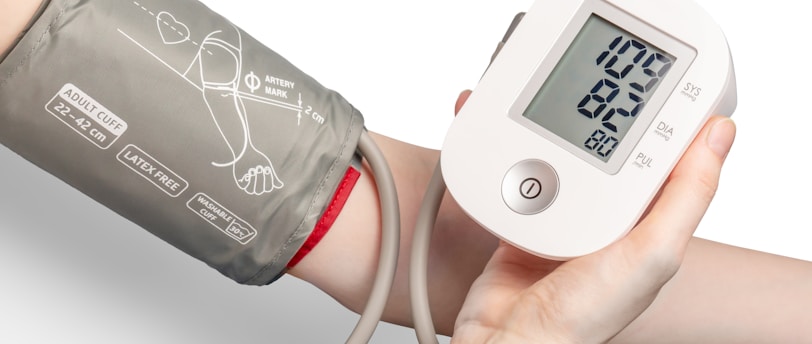

Blood Pressure and Healthspan: The Midlife Number You Shouldn't Ignore
You can exercise regularly, eat reasonably well, maintain a healthy weight, and feel fantastic. You can also have high blood pressure.
That last part is the problem.
High blood pressure rarely announces itself with a dramatic warning. There is usually no pounding soundtrack, no flashing dashboard light, and no mysterious pain telling you something needs attention. Many people feel perfectly normal while elevated pressure quietly places additional stress on their cardiovascular system.
The American Heart Association estimates that nearly half of U.S. adults have high blood pressure. The Centers for Disease Control and Prevention emphasizes that measurement is the only way to know whether your blood pressure is elevated because the condition usually causes no obvious symptoms.
For anyone interested in healthspan, the years spent healthy, mobile, mentally sharp, and independent, this deserves more attention than it receives.
Blood pressure affects more than your heart. It is relevant to stroke risk, kidney health, and the vascular systems that help keep the brain functioning. Research also suggests that blood pressure during midlife may be associated with cognitive health decades later.
The encouraging part is that blood pressure is measurable, modifiable, and often manageable through a combination of lifestyle changes and appropriate medical treatment.
You do not need a laboratory in your basement or a collection of expensive longevity gadgets to get started.
You need accurate measurements, an understanding of what the numbers mean, and a plan for responding to them.
Let's examine the science, separate meaningful evidence from exaggerated longevity claims, and build a practical strategy for protecting your healthspan.
What You'll Learn
By the end of this article, you'll understand:
What systolic and diastolic blood pressure actually measure.
Which blood pressure ranges are considered normal, elevated, or hypertensive under current U.S. guidelines.
Why midlife blood pressure matters for cardiovascular and cognitive health.
What large human studies reveal about blood pressure treatment and long-term outcomes.
Why a single reading may not tell the whole story.
How to measure blood pressure accurately at home.
Which everyday habits can help support healthy blood pressure.
When lifestyle changes may be insufficient and professional treatment matters.
How to avoid common mistakes involving home monitors, wearable devices, and blood pressure supplements.
At a Glance: Blood Pressure and Healthspan
The central finding: High blood pressure is an established, modifiable risk factor for cardiovascular disease, stroke, and kidney disease. It is also associated with cognitive decline and dementia risk.
The midlife connection: Large observational studies suggest that elevated blood pressure during midlife is associated with higher dementia risk later in life, particularly vascular dementia. This does not prove that hypertension directly causes every case of dementia.
The treatment evidence: The SPRINT randomized trial found that intensive blood pressure treatment reduced major cardiovascular events and all-cause mortality in a selected group of adults at elevated cardiovascular risk. The intensive strategy also increased certain adverse events.
The practical target: The 2025 American Heart Association and American College of Cardiology guideline establishes a general treatment goal below 130/80 mm Hg, with individual circumstances requiring clinical judgment.
The easiest first step: Get an accurate reading. If home monitoring is appropriate, use a validated upper-arm cuff and record measurements consistently.
The healthspan opportunity: Blood pressure management can help protect the systems that support physical function, cardiovascular health, and independence as you age.
The cost: Basic monitoring is relatively inexpensive, and many beneficial lifestyle changes require no special equipment.
The important caveat: A healthy reading does not guarantee that every aspect of cardiovascular health is optimal. Blood pressure is one important part of a larger picture.
The Science: What Your Blood Pressure Numbers Actually Mean
Blood pressure is the force exerted by circulating blood against the walls of your arteries.
Your heart generates this pressure as it pumps blood through the circulatory system.
The measurement contains two numbers, and both matter.
Systolic Pressure: The Top Number
Systolic pressure measures the pressure in your arteries when your heart contracts and pumps blood.
For example, in a reading of 118/76 mm Hg, the systolic pressure is 118.
The unit, millimeters of mercury, is abbreviated mm Hg.
Systolic pressure often receives particular attention because it tends to rise with age as large arteries become stiffer. However, that does not make the lower number irrelevant.
Diastolic Pressure: The Bottom Number
Diastolic pressure measures arterial pressure between heartbeats, when the heart relaxes.
In a reading of 118/76, the diastolic pressure is 76.
Both numbers contribute to how clinicians assess blood pressure and cardiovascular risk.
You can have an elevated systolic reading, an elevated diastolic reading, or elevations in both.
A reading of 132/76 is not classified as normal simply because the bottom number looks good. Under current U.S. guidelines, a systolic pressure of 132 falls within the stage 1 hypertension range.
The same principle applies in reverse: an elevated diastolic pressure matters even when systolic pressure is lower.
The takeaway: Do not judge your blood pressure by whichever number makes you feel better.
Understanding the Current Blood Pressure Categories
The 2025 American Heart Association and American College of Cardiology guideline retains the following adult blood pressure categories.
Normal blood pressure
Systolic: below 120 mm Hg.
Diastolic: below 80 mm Hg.
Both numbers must be below their respective thresholds.
Elevated blood pressure
Systolic: 120 to 129 mm Hg.
Diastolic: below 80 mm Hg.
Stage 1 hypertension
Systolic: 130 to 139 mm Hg, or
Diastolic: 80 to 89 mm Hg.
Stage 2 hypertension
Systolic: 140 mm Hg or higher, or
Diastolic: 90 mm Hg or higher.
These categories help clinicians assess risk and determine appropriate next steps. A diagnosis should not be based on a single casual measurement without considering the clinical circumstances and measurement quality.
The general treatment goal in the 2025 guideline is below 130/80 mm Hg for adults, but the appropriate target and treatment plan can differ depending on health status, pregnancy, frailty, and other individual considerations.
Do not use a chart as a substitute for a personalized treatment plan.
Why Blood Pressure Matters Even When You Feel Fine
High blood pressure can place persistent stress on arterial walls and contribute to damage throughout the cardiovascular system.
Over time, uncontrolled hypertension increases the risk of conditions including:
Coronary artery disease.
Heart attack.
Heart failure.
Stroke.
Chronic kidney disease.
Vascular cognitive impairment.
These outcomes can affect far more than lifespan.
They can influence whether you remain able to walk comfortably, exercise, travel, manage everyday activities, and live independently.
That is precisely why blood pressure belongs in a healthspan conversation.
The objective is not simply to avoid a cardiovascular event.
It is to preserve the physical and cognitive capacity that makes later life worth living.
Why Midlife Blood Pressure Matters for Your Brain
Cardiovascular health and brain health are closely connected.
The brain depends on an extensive network of blood vessels to deliver oxygen and nutrients. Damage to that network can interfere with the brain's ability to function normally.
Hypertension is an established risk factor for stroke, and vascular injury can contribute to cognitive impairment.
Researchers have also investigated whether blood pressure during midlife is associated with dementia risk decades later.
The evidence is important, although it requires careful interpretation.
Study 1: Blood Pressure and Dementia in 1.36 Million Women
A prospective study published in Alzheimer's & Dementia in September 2025 examined data from the Million Women Study.
Researchers followed 1,363,457 women, whose average age at enrollment was 57, and recorded 84,729 dementia cases over 21 years.
Midlife hypertension was associated with a 17% higher relative risk of all-cause dementia.
The association was stronger for vascular dementia, with a 50% higher relative risk. The researchers did not find a statistically significant association between midlife hypertension and Alzheimer's disease in that analysis.
What makes this study important?
Its size and duration provide substantial evidence that blood pressure during midlife is relevant to later-life cognitive outcomes.
The stronger association with vascular dementia is also consistent with the importance of blood vessel health for brain function.
What does it not prove?
This was an observational study of women, not a randomized experiment.
Researchers cannot establish from these findings alone that hypertension directly caused the observed cases of dementia or that lowering blood pressure will eliminate that risk.
The results also should not automatically be generalized to every population or every dementia subtype.
Research lesson: Managing blood pressure during midlife is a reasonable part of a broader strategy for protecting cardiovascular and cognitive health. It is not a guarantee against dementia.
Study 2: The SPRINT Trial and Intensive Blood Pressure Treatment
The Systolic Blood Pressure Intervention Trial, known as SPRINT, investigated whether more intensive blood pressure treatment could improve health outcomes in adults at elevated cardiovascular risk.
The randomized trial enrolled 9,361 participants without diabetes or a history of stroke.
Participants were assigned to a systolic blood pressure target below 120 mm Hg or a standard target below 140 mm Hg.
The trial was stopped early after a median follow-up of 3.26 years because the intensive-treatment group experienced fewer major cardiovascular events.
The intensive strategy reduced the relative risk of the primary cardiovascular outcome by 25% and the relative risk of all-cause mortality by 27%. However, certain serious adverse events, including hypotension, syncope, electrolyte abnormalities, and acute kidney injury, were more frequent in the intensive-treatment group.
Why this matters
Unlike an observational study, SPRINT randomly assigned participants to different treatment strategies.
That design provides stronger evidence that intensive treatment can improve outcomes in the population studied.
What does it not prove?
SPRINT does not establish that every adult should independently pursue a systolic reading below 120 mm Hg.
Its participants had specific characteristics, and the intervention involved clinical monitoring.
More intensive treatment can create additional risks, particularly when blood pressure falls too low or medications affect kidney function and electrolyte balance.
Research lesson: Treating hypertension can improve important health outcomes, but the appropriate target must be individualized. The goal is not to win a contest for the lowest blood pressure. The goal is to achieve a level that supports long-term health without creating avoidable harm.
One Blood Pressure Reading Is a Snapshot, Not Your Entire Cardiovascular Story
Imagine stepping on a scale immediately after a large meal and using that number to determine whether your weight-management strategy is working.
It would be a poor experiment.
Blood pressure also changes throughout the day.
Physical activity, caffeine, stress, recent meals, medications, sleep, and measurement technique can all influence a reading.
A single elevated measurement does not automatically mean you have sustained hypertension.
Likewise, a single normal reading does not guarantee that your blood pressure is consistently healthy.
This is why accurate measurement and repeated observations matter.
White-Coat Hypertension
Some people have elevated blood pressure in a medical setting but lower readings outside the clinic.
This pattern is commonly called white-coat hypertension.
Nervousness about an appointment can contribute to a temporary increase in blood pressure.
The CDC notes that a substantial proportion of people with elevated readings in a medical office may have normal readings outside that setting.
That does not mean every high office reading should be dismissed.
It means clinicians may use home monitoring or ambulatory blood pressure monitoring to better understand the pattern.
Masked Hypertension
The reverse can also occur.
A person's blood pressure may appear normal in a medical office but be elevated at home or during ordinary daily activities.
This is known as masked hypertension.
Without appropriate assessment, the person may receive false reassurance from occasional normal office measurements.
Home monitoring can help identify discrepancies, although diagnosis and interpretation should remain part of professional care.
What About Blood Pressure Variability?
Your readings may differ from morning to evening or from one day to another.
Some variation is normal.
A sudden difference can reflect stress, activity, caffeine, measurement technique, or a change in health status.
Persistent variation may sometimes be clinically relevant, but it should not be interpreted in isolation.
Researchers continue to investigate the relationship between blood pressure variability and long-term outcomes, and the evidence is not sufficient to justify treating every fluctuation as a separate disease.
For most people, the practical priorities are straightforward:
Measure correctly.
Record readings consistently when monitoring is indicated.
Evaluate the overall pattern rather than reacting to every isolated number.
Discuss persistent elevations or concerning changes with a healthcare professional.
How to Measure Your Blood Pressure Correctly at Home
Home monitoring can provide useful information, especially for people with diagnosed hypertension or those whose clinicians want to confirm a diagnosis or evaluate treatment.
The American Heart Association recommends an automatic, cuff-style upper-arm monitor and emphasizes the importance of correct cuff size and measurement technique.
Here is how to make the measurements more reliable.
Step 1: Choose an Appropriate Monitor
Use a validated automatic upper-arm blood pressure monitor.
The cuff must fit your arm correctly.
A cuff that is too small or too large can produce inaccurate readings.
Wrist and finger monitors are generally less reliable for routine home monitoring.
The American Heart Association recommends checking whether a device has been validated for accuracy. Its guidance also suggests bringing the monitor to a healthcare appointment so the technique and readings can be checked against clinical equipment.
Do not assume a device is medically accurate simply because it connects to an app or looks expensive.
Step 2: Prepare Before Measuring
For a more reliable measurement:
Avoid smoking, caffeine, and exercise for at least 30 minutes beforehand.
Empty your bladder.
Sit quietly for at least five minutes.
Choose a comfortable chair with your back supported.
Keep both feet flat on the floor.
Avoid crossing your legs.
Place your bare upper arm on a table or other support so the cuff is at heart level.
Do not talk or use your phone during the measurement.
These steps help reduce avoidable sources of error.
The point is to measure resting blood pressure rather than the physiological consequences of rushing around the house.
Step 3: Take Two Readings
Take two readings approximately one minute apart.
Record both.
If your clinician has asked you to monitor at home, measure at the times and frequency they recommend.
Taking measurements at reasonably consistent times makes it easier to compare results.
Do not select only the lowest reading and discard the rest because it looks more appealing.
The data is useful precisely because it reflects what is happening, not what you wish were happening.
Step 4: Keep a Simple Record
Record:
Date.
Time.
Systolic pressure.
Diastolic pressure.
Relevant symptoms, if any.
Any unusual circumstances that might have influenced the reading.
Your monitor may store this information automatically, but a written or digital log works too.
Bring the record to your next appointment.
A series of properly collected measurements can be more informative than a number recalled from memory.
Step 5: Do Not Self-Adjust Medication
If you already take blood pressure medication, continue following your prescribed plan unless your healthcare professional advises otherwise.
Do not stop medication because your readings look normal.
Normal readings may reflect the fact that treatment is working.
If your readings are repeatedly low or you experience dizziness, faintness, or other concerning symptoms, contact your healthcare professional for guidance.
Treatment changes should be based on the overall clinical picture rather than a single number.
What Do You Do If Your Blood Pressure Is High?
The appropriate response depends on how high the reading is, whether it persists, and whether symptoms are present.
If You Get One Unexpectedly High Reading
Sit quietly and repeat the measurement using the correct technique.
Record both readings.
If elevated readings persist, contact your healthcare professional to discuss what they mean and whether further evaluation is needed.
Do not diagnose yourself from a single measurement.
Do not ignore repeated elevations simply because you feel fine.
If Your Blood Pressure Is Above 180/120 mm Hg
A reading in this range requires prompt attention.
If the reading is above 180/120 mm Hg, wait at least one minute and measure again.
If it remains severely elevated, contact a healthcare professional immediately for guidance.
If the high reading is accompanied by symptoms such as chest pain, shortness of breath, back pain, numbness, weakness, vision changes, or difficulty speaking, call 911.
These symptoms can indicate a medical emergency. Do not wait for the blood pressure to fall on its own.
If Your Readings Are Consistently Above Your Target
Arrange a clinical review.
Your clinician may assess your overall cardiovascular risk, check for contributing conditions, review medications, and recommend lifestyle changes or treatment.
Persistent hypertension is not a problem to solve through willpower alone.
Sometimes lifestyle changes are sufficient to improve mildly elevated blood pressure. In other situations, medication is an important part of reducing risk.
Both approaches can have a place in a healthspan strategy.
The Practical Protocol: Five Ways to Support Healthy Blood Pressure
The 2025 American Heart Association and American College of Cardiology guideline recommends lifestyle measures including a heart-healthy dietary pattern, sodium reduction, appropriate dietary potassium intake, physical activity, weight management, stress management, and reducing or eliminating alcohol.
These behaviors are useful because they address several contributors to cardiovascular health at once.
The goal is not to create a perfect lifestyle.
It is to build a set of habits that can survive an ordinary Tuesday.
1. Build Meals Around a Heart-Healthy Pattern
The Dietary Approaches to Stop Hypertension eating pattern, better known as DASH, emphasizes vegetables, fruits, whole grains, beans, nuts, and other nutrient-rich foods.
It also emphasizes limiting sodium and reducing reliance on heavily processed foods that can contribute substantial amounts of salt to the diet.
You do not need to eliminate every packaged food in your kitchen.
Start by examining the foods you eat frequently.
Compare sodium levels between similar products.
Choose lower-sodium alternatives when practical.
Build more meals around minimally processed ingredients.
Use herbs, spices, citrus, and other flavorings to make meals satisfying without depending entirely on salt.
Consistency matters more than turning one dinner into a nutritional performance review.
A note about potassium
Potassium from foods can be part of a blood-pressure-supportive eating pattern.
However, people with kidney disease or those taking certain medications may need to limit potassium intake.
Do not begin potassium supplements or use potassium-based salt substitutes without checking whether they are appropriate for you.
More is not automatically better.
2. Move Regularly
Physical activity supports cardiovascular health and can help lower blood pressure.
Walking is a practical starting point because it is accessible, adaptable, and easy to incorporate into daily life.
You might begin with a 10- to 15-minute walk and gradually increase duration as your fitness and circumstances permit.
If you already exercise, consistency remains valuable.
The broader goal is to combine aerobic activity with resistance training and regular movement throughout the week.
Our article on the best exercises for longevity explores how different forms of exercise contribute to healthspan.
If you have very high blood pressure, symptoms, or a condition that limits activity, ask a healthcare professional what level of exercise is appropriate before starting a demanding program.
3. Pay Attention to Weight Without Making It Your Entire Identity
For people carrying excess body weight, weight reduction can help improve blood pressure.
However, body weight is only one component of cardiovascular health.
Physical activity, dietary quality, sleep, alcohol intake, genetics, kidney function, medications, and other factors also influence blood pressure.
A person can have a higher body weight and relatively healthy blood pressure.
A person at a lower weight can have hypertension.
Use weight as one piece of information, not a universal verdict on health.
For healthspan, sustainable habits and functional fitness matter more than pursuing a particular appearance.
4. Review Alcohol and Nicotine Use
Alcohol can affect blood pressure, and reducing consumption may be beneficial for people who drink.
The appropriate advice depends on the person's current intake, medical history, and other risk factors.
If you do not drink, there is no reason to start for cardiovascular or longevity benefits.
Nicotine use also carries cardiovascular risks.
If you smoke or use nicotine products, discuss evidence-based cessation support with a healthcare professional.
These changes can have benefits that extend beyond blood pressure alone.
5. Take Sleep and Stress Seriously
Sleep and stress are not substitutes for measuring blood pressure, but they belong in the broader conversation.
Poor sleep, chronic stress, and certain sleep disorders may complicate blood pressure management.
If you regularly snore heavily, gasp during sleep, or remain excessively sleepy during the day, discuss these symptoms with a healthcare professional.
Sleep apnea is one possible contributor to difficult-to-control hypertension.
Likewise, stress-management practices such as walking, breathing exercises, relaxation, or social activities may help support a healthier routine.
These practices are useful complements to appropriate treatment.
They are not replacements for it.
The Technology Question: Should You Trust Your Smartwatch?
Wearable technology has made health monitoring increasingly accessible.
However, there is a difference between tracking a health-related signal and measuring blood pressure accurately.
The 2025 U.S. hypertension guideline specifically cautions against relying on cuffless devices, including smartwatches, for accurate blood pressure measurements until they demonstrate greater precision and reliability.
That distinction matters.
A smartwatch may track heart rate, activity, and other useful information.
But an estimated blood pressure value from an unvalidated device should not be treated as equivalent to a properly measured upper-arm cuff reading.
If you want to monitor blood pressure at home, prioritize a validated monitor and correct technique.
You do not need the most expensive device.
You need reliable measurements.
Before buying a monitor, consult the American Heart Association's home blood pressure monitoring guidance and its recommendations for validated equipment.
Technology should make good health decisions easier, not introduce another source of uncertainty.
Five Blood Pressure Myths Worth Retiring
Myth 1: If I Feel Fine, My Blood Pressure Must Be Fine
False.
High blood pressure often has no noticeable symptoms.
That is why periodic measurement matters even when you feel healthy.
Myth 2: One High Reading Means I Have Hypertension
Not necessarily.
Blood pressure fluctuates, and technique or temporary circumstances can affect results.
A clinician should interpret repeated measurements in context.
Persistent elevations deserve attention, but one unexpected result should not automatically become a diagnosis.
Myth 3: One Normal Reading Means I Can Stop Monitoring
Not necessarily.
A normal measurement describes your blood pressure at that moment.
If you have been diagnosed with hypertension or your clinician has asked you to monitor at home, continue following the recommended schedule.
Never stop prescribed medication simply because a few readings look normal.
Myth 4: Lifestyle Changes Always Eliminate the Need for Medication
False.
Lifestyle changes are important, but they are not always sufficient.
Medication may be appropriate based on average blood pressure, cardiovascular risk, existing conditions, and response to lifestyle measures.
The 2025 guideline recommends medication for adults with average blood pressure of at least 140/90 mm Hg and for selected adults with lower readings who have additional cardiovascular risk factors or conditions.
The decision belongs in a clinical discussion.
Myth 5: The Lower the Number, the Better
Not universally.
The SPRINT trial demonstrated benefits from intensive treatment in a selected high-risk population, but some adverse events were more frequent with the intensive strategy.
A target that is appropriate for one person may not be appropriate for another.
Symptoms, other medical conditions, medication effects, and individual circumstances all matter.
The objective is healthy blood pressure, not the lowest achievable number.
Risks, Limitations, and What Science Still Doesn't Know
Blood pressure management is supported by extensive clinical evidence, but several limitations deserve attention.
A Blood Pressure Reading Is Not a Complete Health Assessment
Blood pressure is one cardiovascular risk factor.
Cholesterol, blood glucose, smoking, physical activity, family history, kidney function, and other factors also influence health.
A normal reading does not eliminate the need to consider the rest of the picture.
Observational Dementia Studies Cannot Establish Causation
The Million Women Study found an association between midlife hypertension and later dementia, especially vascular dementia. It did not prove that lowering blood pressure prevents every form of dementia.
Research on vascular health and cognitive aging continues to develop.
Treatment Has Benefits and Risks
Lowering elevated blood pressure can reduce cardiovascular risk, but medications may produce side effects.
Intensive treatment requires appropriate monitoring and individualization.
Do not change your medication dose based on an online article or a single home measurement.
Blood Pressure Targets May Differ Between Individuals
The general treatment goal below 130/80 mm Hg in the 2025 U.S. guideline is an important reference point, not permission to prescribe yourself a target.
Pregnancy, frailty, other medical conditions, and treatment tolerance may change the appropriate approach.
Supplements Are Not a Shortcut
Products marketed for cardiovascular health may make claims that exceed the available evidence.
Some supplements can interact with medications or affect blood pressure unpredictably.
Rather than relying on a supplement to compensate for uncontrolled hypertension, prioritize accurate measurement, evidence-based lifestyle changes, and professional guidance.
The Healthspan Scorecard
Evidence strength: Strong for high blood pressure as a modifiable cardiovascular risk factor and for the benefits of appropriately treating hypertension.
Potential healthspan impact: High, because preventing cardiovascular complications can help preserve physical function, independence, and quality of life.
Brain-health relevance: Important, with observational evidence linking midlife hypertension to later dementia risk, particularly vascular dementia.
Practicality: High. Accurate measurement and sustainable lifestyle changes are achievable for many people.
Cost: Low to moderate, depending on whether you need a home monitor or clinical treatment.
Technology requirement: None. A validated upper-arm monitor is useful when home monitoring is appropriate, but wearable technology is not required.
Risks: Misinterpreting isolated readings, changing medication without guidance, pursuing an inappropriate target, or delaying evaluation of persistent hypertension.
Long-term uncertainty: Researchers continue to refine individualized treatment strategies and investigate how blood pressure management affects different aspects of cognitive aging.
Overall assessment: Blood pressure is one of the most practical health measures to understand and manage. Its importance lies not in achieving an impressive number on a screen, but in reducing preventable health risks over time.
Key Takeaways
High blood pressure often has no noticeable symptoms, making measurement essential.
The current U.S. guideline classifies stage 1 hypertension as systolic pressure of 130 to 139 mm Hg or diastolic pressure of 80 to 89 mm Hg.
Midlife hypertension is associated with increased risk of cardiovascular disease and later vascular dementia.
Randomized clinical evidence supports appropriately treating hypertension to reduce major cardiovascular events in suitable patients.
A single reading does not necessarily establish a diagnosis.
A validated upper-arm cuff and correct measurement technique can improve the reliability of home readings.
A heart-healthy diet, physical activity, appropriate weight management, and reduced alcohol intake can support blood pressure control.
Medication may be necessary even when lifestyle habits are good.
Do not stop medication or pursue an intensive blood pressure target without appropriate medical guidance.
The goal is to preserve health and function, not to achieve the lowest possible reading.
Conclusion: Protect the Years You Want to Live Well
Longevity culture often encourages us to look for complicated solutions.
We measure biological age, compare fitness scores, debate supplements, and investigate technologies that promise to optimize every corner of human physiology.
Yet one of the most useful health measures is remarkably ordinary.
Blood pressure.
It does not tell you everything about your health, but it can reveal an important risk that might otherwise go unnoticed for years.
The evidence shows that appropriately managing high blood pressure can reduce cardiovascular risk. Emerging long-term research also reinforces the importance of vascular health during midlife, when many people still feel perfectly healthy.
The practical response is refreshingly straightforward.
Know your numbers.
Measure accurately.
Build sustainable habits.
Discuss persistent elevations with a healthcare professional.
And take prescribed treatment seriously.
You do not need to transform your entire life this weekend. Start by arranging a blood pressure check or learning how to monitor it properly at home if appropriate.
Then use the information to make informed decisions.
Healthspan is not simply about avoiding death for as long as possible. It is about protecting the physical and cognitive capacity to participate in life.
A well-managed blood pressure reading will not guarantee that future.
But addressing a major, modifiable cardiovascular risk factor is a meaningful step toward it.
Share the Gift of Healthspan
If you found these insights helpful, please share this article with your friends, family, and loved ones. Simple, science-backed lifestyle changes can make a meaningful difference in protecting the long-term health and vitality of the people you care about most.
Further Reading on Longevity and Healthspan
Best Exercises for Longevity: Walking, Strength Training, and the Science of Healthy Aging — Discover the best exercises for longevity based on the latest human research. Learn how walking, strength training, aerobic fitness, and exercise variety can help extend lifespan and improve healthspan. https://www.lifebeyondyears.com/best-exercises-for-longevity
VO2 Max and Longevity: Why Your Aerobic Fitness May Predict How Long You Live — VO2 max is one of the strongest predictors of longevity. Learn what the science says about aerobic fitness, mortality, aging, and how to improve your VO2 max. https://www.lifebeyondyears.com/vo2-max-longevity-aerobic-fitness
Disclosures
Author: Matt Kerr, Life Beyond Years Editor.
Review date: October 14, 2026.
Methodology: This article synthesizes current U.S. hypertension guidance, official blood pressure measurement recommendations, a randomized blood pressure treatment trial, and a large prospective study of hypertension and dementia. Clinical recommendations are distinguished from observational findings, and associations are not presented as proof of causation.
Conflict of interest: No paid product endorsements or supplement recommendations are included in this article. No financial relationships with blood pressure monitor manufacturers are claimed.
Medical disclaimer: This article is for educational and informational purposes only. It is not medical advice and does not replace professional diagnosis or treatment. Life Beyond Years is not a medical practice, and its editorial team does not provide diagnosis or treatment. Consult a qualified healthcare professional regarding blood pressure readings, medication, cardiovascular risk, or changes to your health routine. Do not stop or adjust prescribed medication without appropriate medical guidance. If a severely elevated blood pressure reading is accompanied by symptoms suggestive of a medical emergency, call 911.
References
Writing Committee Members; Jones DW, Ferdinand KC, Taler SJ, et al. 2025 AHA/ACC Guideline for the Prevention, Detection, Evaluation, and Management of High Blood Pressure in Adults: A Report of the American College of Cardiology/American Heart Association Joint Committee on Clinical Practice Guidelines. Hypertension. 2025;82(10):e212-e316. https://doi.org/10.1161/HYP.0000000000000249
The SPRINT Research Group. A Randomized Trial of Intensive versus Standard Blood-Pressure Control. The New England Journal of Medicine. 2015;373:2103-2116. https://doi.org/10.1056/NEJMoa1511939
Floud S, Hermon C, Whiteley W, Fitzpatrick KE, Reeves GK. Hypertension in pregnancy and in midlife and the risk of dementia: prospective study of 1.3 million UK women. Alzheimer's & Dementia. 2025;21(9):e70595. https://doi.org/10.1002/alz.70595
Centers for Disease Control and Prevention. Measuring Your Blood Pressure. Updated September 4, 2026. This official resource explains why blood pressure measurement matters, how to measure correctly, and how to record readings at home. https://www.cdc.gov/high-blood-pressure/measure/index.html
American Heart Association. Home Blood Pressure Monitoring. This resource covers validated upper-arm monitors, cuff selection, proper measurement technique, recording results, and when to seek medical guidance. https://www.heart.org/en/health-topics/high-blood-pressure/understanding-blood-pressure-readings/monitoring-your-blood-pressure-at-home